
Reviews
Bright Picture Match Puzzle delivers exactly what its name promises: a cheerful, low-stress matching experience for kids. The tile-flipping mechanic is intuitive, and the colorful illustrations keep young players engaged without overwhelming them. The lack of timers or penalties makes it ideal for building concentration skills at a comfortable pace. While it won't challenge experienced puzzle solvers, its accessibility and family-friendly design make it a reliable choice for short breaks or quiet time. The browser-based format adds convenience, letting children play on nearly any device instantly.
About this game
Simple Matching Mechanics
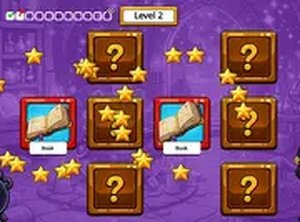
Bright Picture Match Puzzle centers on a classic tile-flipping challenge. Players see a grid of face-down cards, each hiding a colorful illustration. The objective is to locate and pair identical images by remembering where each one sits. After revealing two tiles that match, those cards stay open and eventually disappear from the board. If the pictures differ, the tiles flip back after a short pause, encouraging players to note their positions for later attempts. This straightforward loop forms the core of the experience, requiring no complex rules or prior knowledge to start playing.
Visual Style and Atmosphere
The game features bright, friendly artwork that appeals to young audiences. Each tile displays a playful illustration, such as animals, toys, or everyday objects, rendered in a clean, cartoon-like style. The background uses soft colors to avoid visual clutter, helping players focus on the task. Sound effects are gentle and positive, providing feedback without causing distraction. This design creates a calm environment where the primary goal is enjoyment rather than competition.
Accessibility and Device Support
Bright Picture Match Puzzle runs entirely in a standard web browser, meaning no downloads or installations are required. It works on desktop computers, tablets, and smartphones, adapting to different screen sizes automatically. The interface uses large, touch-friendly tiles that respond to taps or clicks. A full-screen option may be available to minimize on-screen distractions. Since no account creation or personal data is needed, players can jump into a session instantly from any device with an internet connection.
Learning Through Play
While the game is primarily recreational, it naturally supports cognitive development. Regularly matching tiles helps sharpen short-term memory and visual recognition. Children can improve their attention span by concentrating on card positions across multiple rounds. The lack of strict time limits reduces pressure, allowing players to progress at their own speed. Parents and educators may find this a useful tool for introducing pattern-matching concepts in a low-stress setting.
Replay Value and Variety
Each new game arranges the tiles in a different layout, ensuring that no two sessions feel identical. The number of tiles may vary, offering options for shorter or longer play sessions. Because the game relies on memory rather than luck, repeated play can lead to noticeable improvement in recall speed. This variability keeps the activity engaging for both beginners and those looking to refine their skills over multiple rounds.







Comments
Sign in to leave a review
No account? Create one
No comments yet.