
Reviews
Color Grid Logic Puzzle stands out for its elegant rule set. The combination of region constraints and adjacency restrictions forces players to think several moves ahead. Each puzzle feels like a small victory when solved. The gradual difficulty curve keeps the experience engaging, and the clean interface never gets in the way. It is a solid choice for anyone who enjoys pure logic puzzles without time pressure or distractions.
About this game
Core Placement Rules
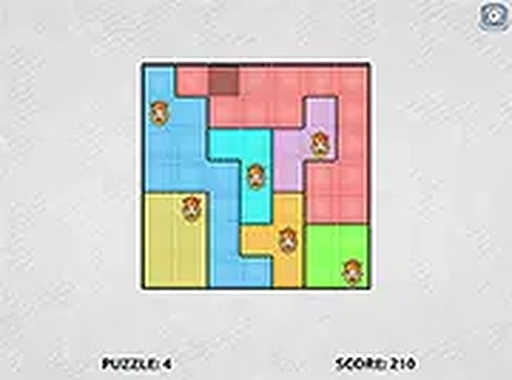
Color Grid Logic Puzzle is built around a simple but demanding set of constraints. The playing field is divided into several colored sections, each requiring exactly one king. Beyond that, no two kings may occupy the same row or column. They also cannot be placed in adjacent squares, whether horizontally, vertically, or diagonally. These rules combine to create a puzzle that demands careful spatial reasoning and forward planning.
Region-Based Strategy
Each colored region on the grid acts as its own small puzzle. Because a region can hold only one king, players must consider which tile within that zone is the best candidate. Some regions may have only a few valid spots, while others offer more flexibility. Identifying the most constrained areas first is a common approach, as it helps narrow down possibilities for the rest of the grid.
Scoring and Progress
Every incorrect placement reduces your score. If your score drops to zero, you have two options: skip the level with a zero score, or watch a short advertisement to retry. This system encourages careful decision-making rather than random guessing. Players who enjoy perfecting their performance will appreciate the incentive to think before clicking.
Visual Design and Accessibility
The interface uses a clean, colorful grid that makes each region easy to distinguish. Tiles highlight when they are valid for placement, reducing confusion. The simple layout ensures that players of all ages can jump in without a steep learning curve. The focus stays on the logic puzzle itself, with no distracting animations or cluttered menus.
Difficulty Curve
Early levels introduce the basic rules with smaller grids and fewer regions. As players advance, the grid grows larger and the colored sections become more complex. Later puzzles may require several steps of deduction before a single king can be placed. This gradual increase in challenge keeps the experience fresh without overwhelming newcomers.








Comments
Sign in to leave a review
No account? Create one
No comments yet.